

Newspaper Digitization & Microfilm Scanning for Libraries & Archives
Turn microfilm reels, newspapers, and historic books into a searchable digital archive your patrons can use from anywhere.
Libraries, archives, and historical societies deal with some of the trickiest records around — newspaper microfilm going back a century, bound books, handwritten documents, and formats most scanning companies won’t touch. Some of it is hundreds of years old, and all of it matters to somebody.
We digitize all of it. Your collection becomes a searchable digital archive patrons can use online, your originals stay preserved, and your staff stops spending afternoons hunched over the microfilm reader.
How we help libraries & archives
Three ways we take your collection digital. Every project is scoped to what you actually have — no cookie-cutter packages.
Newspaper & document scanning
If it’s on paper, we can scan it — including the fragile stuff.
- Newspapers and newsprint, bound and unbound books, handwritten and oversize documents
- Output in PDF, PDF/A, JPG, or TIFF — whatever your systems need
- Full indexing and data entry so records are findable, not just digital
- Online database development for better information sharing
→ More on our document scanning services.
Microfilm & microfiche conversion
Microfilm is where we started, and it’s still what we do most.
- Nearly every microform: 16/35mm roll film, 3M cartridges, jacketed fiche, COM fiche, and aperture cards
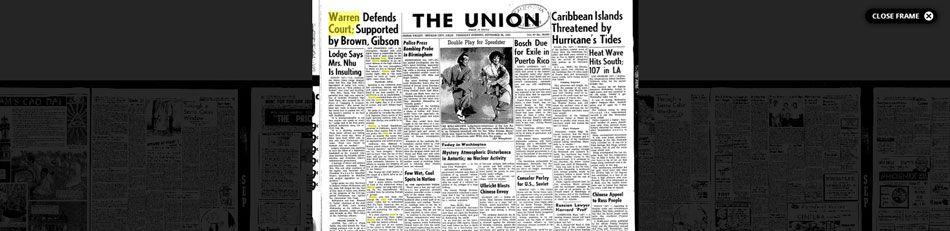
- Full-text search, so a patron finds an obituary in seconds instead of an afternoon
- Image enhancement that pulls legible scans off old or faded film
- Archival microfilming if you also need preservation copies on film
→ Learn about our microfilm digitization services.
Hosted online access with Digital ReeL
Scanning is half the job. Digital ReeL is how patrons actually use the collection.
- Simple web application — patrons search by keyword and phrase from any browser
- Remote access opens your collection to researchers everywhere, not just walk-ins
- Digital copies are backed up offsite, so a fire or flood doesn’t erase local history — see document disaster preparedness
→ Learn more about Digital ReeL.
Not sure which option fits your collection? Get a free project quote and we’ll walk you through it.
How a project works
- Tell us what you have. Rolls, fiche, bound volumes, boxes — rough counts are fine. Not sure? Here’s how to estimate your microfilm and microfiche.
- We scope it. You get a clear quote based on your actual materials. No surprises later!
- We scan and index. Your materials are tracked from pickup to return, and every image is processed and indexed so it’s findable.
- You go live. Files delivered to your systems, or hosted in Digital ReeL for patron access.
What other libraries & archives say
 Napa County Library, CA
“In the past, our newspaper microfilm archive was only available at our physical location. Since January (2016), we’ve averaged 45,000+ image requests per month and users are from all over the world.”
— Anthony Halstead, Assistant Director of Library Services & Community Outreach
Read the Napa County case study →
Chapin Memorial Library, SC
“The grant from The Chapin Foundation, which has supported our library since its inception, made this essential project possible. Preserving our local newspaper history is crucial, and BMI has been an exceptional partner in bringing this vision to life.”
— Carolyn Savage, Adult Services Librarian
Watch Chapin Memorial Library’s video about Digital ReeL →
The Old Courthouse Museum, MS
“The work done to scan our microfilm was flawlessly executed. The turnaround was quick and the people at the firm were a pleasure to work with. Without reservation, I recommend BMI Imaging Systems.”
— John Driscoll, Curator
Frequently asked questions
How much does it cost to digitize newspaper microfilm?
It depends on how much film you have and what condition it’s in. Most library projects are priced per roll or per image, and we scope every project against your actual collection — so get a free quote and you’ll have a real number instead of a guess. Ballpark, you’re going to be in teh $25 – $45 range for issue-level indexing for newspaper microfilm.
Can patrons search digitized newspapers by keyword?
Yes. With full-text search, a patron types a name or phrase and jumps straight to the article. No more cranking through reels! That’s how Napa County Library went from local-only access to 45,000+ image requests a month from all over the world.
Can you scan bound books and fragile historic documents?
Yes. We handle bound and unbound books, handwritten materials, oversize formats, and documents that are hundreds of years old. Fragile items get handled like fragile items.
What happens to our microfilm after scanning?
Your originals come back to you. Digitizing doesn’t mean giving up the film — plenty of archives keep it as the preservation copy and use the digital version for day-to-day access.
Do we need to worry about copyright before digitizing newspapers?
It’s worth understanding before you scan. Many older newspapers are in the public domain, but the rules vary by publication and date. Our blog post “Copyright and Digitization” covers what you should know before scanning copyrighted material.
How long does a library digitization project take?
It depends on volume. A few hundred microfilm rolls move a lot faster than a full newspaper catalog of thousands of rolls, bound books, and thousands of hard copy newsprint. When we scope your project, you get a timeline along with the price.
Can people access the digital archive from outside the library?
Yes — that’s one of the biggest wins. Digital ReeL is web-based, so patrons and researchers can search your collection from anywhere, not just at your building.
Do you work with small libraries and historical societies?
Yes. Projects don’t have to be massive — we scope to your collection and your budget. Watsonville Public Library picked Digital ReeL specifically because it was priced competitively.
Helpful Resources
Just getting started on your digital conversion? These are good places to learn more about scanning projects:
- BMI blogs — plain-language articles about paper scanning, microfilm conversion, secure processes, and more.
- The Digital Imaging Channel — our YouTube channel that gives you long-form videos and shorts all about digitization projects.
- Project Estimator — before talking to anyone, you can see what your project may cost with our estimator tool. Great as a starting point.
Ready to open up your historic collection?
Tell us what you have and we’ll put together a free project quote — no pressure, no obligation.
Clients:
Trusted by libraries and archives across the country, including Sonoma County Library, Belmont Public Library, Weston Historical Museum, LA County, San José State University, and more.