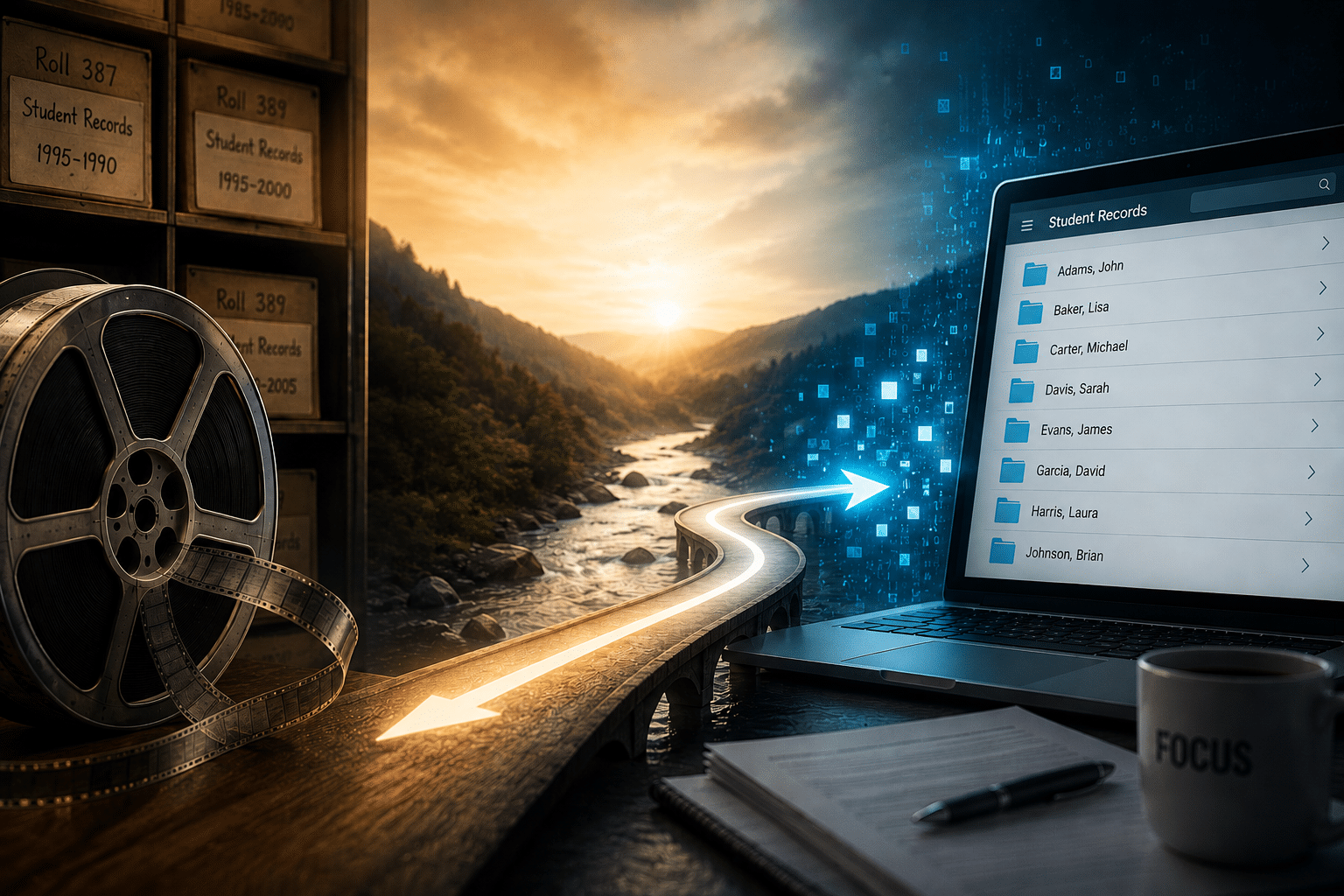
Index by Student, or Keep It at the Roll Level? A Registrar’s Guide to Digitizing Microfilm Records
Should you index every student or keep digitized microfilm at the roll level? A registrar's guide to the cost and indexing tradeoffs.
What happens to your records during a scanning project? This guide walks through how records are tracked, secured, and protected from pickup through final delivery.
Choosing a digitization partner starts before the RFP. This guide explains how to evaluate security, technology, pricing, and project fit before committing to a vendor.
Learn how digital archive solutions preserve microfilm for the long term with secure conversion, indexing, and fast access to important legacy records.
How do you know if an aperture card digitization project actually worked? This guide breaks down the key signs—from searchability to image quality—that determine real success.
How much does it really cost to find a file? This guide shows how to measure document indexing ROI using clear KPIs like cost-to-retrieve and time-to-answer.
Digitizing records is only part of the process. This guide explains how public agencies plan digitization projects with the governance, documentation, and controls needed to stand up under audit.
Legacy data migration can look simple on paper, but hidden risks can create long-term problems. This guide highlights key warning signs and how to protect your records, access, and compliance.
What actually happens during a CJIS digitization project? This guide walks through how law enforcement records are handled, tracked, and converted while maintaining security and compliance.
Backfile scanning isn’t just cleanup. This article explains when digitizing legacy records becomes a strategic move to improve access, reduce risk, and support long-term records management.