

Land Records & Vital Records Scanning for Recorders, Clerks & Registers of Deeds
Digitize deeds, indices, vital records, maps, and bound volumes — and plug them straight into the recording system you already use.
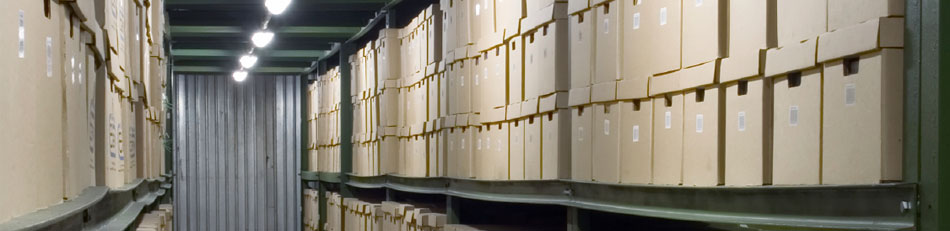
As a Recorder, Clerk, Assessor, or Register of Deeds, the integrity of the public record is on you. Grantor/grantee indices, official records, birth and death certificates, maps, photostats, bound volumes going back to the 1800s — it all has to be preserved, and it all has to be findable.
We digitize the whole collection. Your records become searchable digital files that load into your existing recording system or get hosted securely, your originals stay protected, and your counter staff stops digging through the vault.
How we help recorders & clerks
Every project is scoped to what’s actually in your vault and what you need — no cookie-cutter packages.
Land, official & vital records scanning
If it’s in your vault, we can scan it — books, maps, and everything between.
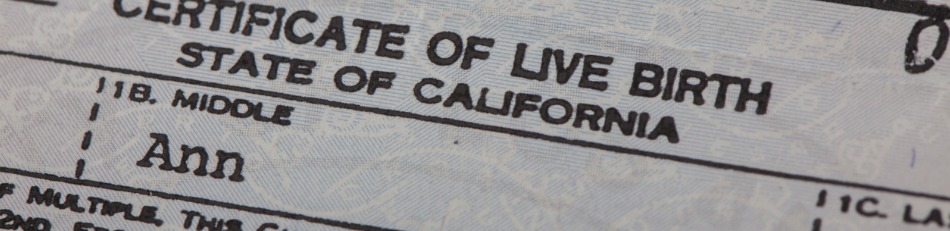
- Maps, photostats, bound volumes, grantor/grantee indices, and vital records
- Large-volume back-file conversion — at our secure facilities or on-site at your office
- OCR that turns image-only records into text-searchable repositories
- Redaction services for dates of birth, SSNs, driver’s license numbers, and more
- Output in PDF, PDF/A, JPG, or TIFF — whatever your systems need
→ Learn more about our document scanning services.
Microfilm conversion of legacy records
Those reels and fiche in the back room don’t have to stay analog.
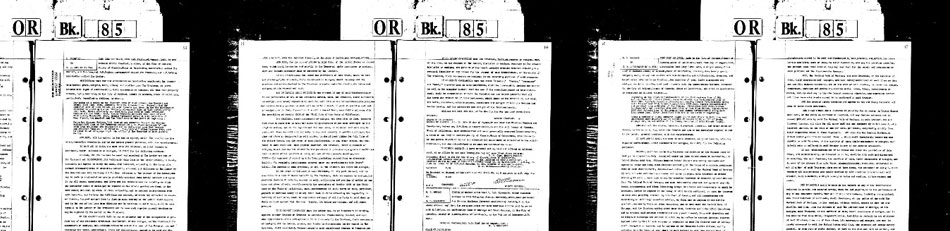
- Nearly every microform: 16/35mm roll film, 3M cartridges, jacketed fiche, COM fiche, and aperture cards
- Image enhancement (like adjustable grayscale) that pulls legible scans off old or faded film
- Indexing and data entry so legacy records are findable, not just digital
→ Learn about our microfilm digitization services.
Hosted access with Digital ReeL
Skip the servers, the licensing fees, and the IT overhead — we host, your staff and the public search.
- Historic vital, official record, and index applications hosted at BMI’s secure data center
- Staff and public retrieval from the internet — link access straight from your website
- You decide which datasets are public and which stay internal
- Offsite backup copies protect the record in the event of a disaster
→ Find out more about Digital ReeL.
Integration with your existing recorder system
Your staff shouldn’t have to learn a new system to see old records.
- Load digitized images and data into the recording system you already run — Tyler, Anthem, Manatron, Fidlar, Cott, Hyland OnBase, and others
- Historical and microfilm records become accessible through your current interface
- One system for everything — no retraining, no second login
→ Learn more about systems integration.
Microfilm creation & Bytreon Trusted System
Need physical microfilm created? We got you. Want the trustworthiness of hard copy microfilm, but in a trusted digital file? We got you!
- Microfilm “archive writing” to create archival microfilm for those departments that need the hard copies
- Digital trusted records through our Bytreon application to prove the authenticity and integrity of their digital records.
- Bytreon stores digital files and can prove that modifications to those files were not made after the files were received. The files are provable to be immutable.
→ Learn more about the Bytreon trusted system.
AB-1466 restrictive covenant review & modification
AB-1466 says restrictive covenants have to come out of California’s official records. We’ve built the platform and workflow that get you there.
- OCR paired with AI and machine learning locates restrictive covenant words and phrases across hundreds of thousands of document images
- Human verification confirms context — “Japanese tea room” isn’t a restrictive covenant, and our process knows the difference
- Redacted and original versions delivered with index data for your County Counsel’s review, with approvals and rejections tracked
- Approved modifications are ready to re-record into your recording document management system (RDMS)
- Our detection improves with every county project — you get the benefit of every phrase already identified elsewhere
- And if you’re not in California, the knowledge and tools can be applied to your specific requirements
→ Learn more about our AB-1466 Restrictive Covenant Modification application.
How a project works
- Tell us what you have. Books, reels, fiche, maps, boxes — rough counts are fine. We’ll help you estimate.
- We scope it. You get a clear quote based on your actual materials, including on-site options if records can’t leave your office.
- We scan, index, and redact. Your materials are tracked from pickup to return, and every image is processed so it’s findable — and compliant.
- You access your files. Files load into your recording system, or get hosted in Digital ReeL for staff and public access.
What other recorders say about working with BMI
 San Luis Obispo County Clerk-Recorder, CA
“The sheer volume of data that we had converted would have required a significant investment in servers, storage and the IT administrative resources to manage an internally deployed system. The County was able to eliminate the need to worry about the technical management of the solution by outsourcing the entire operation to BMI.”
— Julie Rodewald, County Clerk-Recorder
Read the SLO County case study →
Pitkin County Clerk and Recorder, CO
“When we reviewed the Digital ReeL solution, we found the price very appealing. It was cost effective, practical and enabled us to digitally convert our entire set of records, thus relieving our staff and the public of having to deal with large historical books and microfilm.”
— Linda Gustafson, Chief Deputy
Read the Pitkin County case study →
Sonoma County Clerk-Recorder, CA
“BMI exported a large volume of records from Digital ReeL for import into our Tyler database. The data spanned 50+ document types, which made the project complex, but they were patient and flexible as we resolved issues with our other vendor. Their knowledge of our records and data-migration expertise made the process as simple as possible for us.”
— Amanda King, Chief Deputy County Clerk-Recorder
Frequently asked questions
How much does it cost to digitize land and vital records?
It depends on volume, format, and condition — bound books price differently than microfilm or loose paper. We scope every project against your actual holdings, so get a free quote and you’ll have a real number instead of a guess.
Can scanned records integrate with our recording system?
Yes. We capture documents and data for integration with existing electronic recording systems — Tyler, Anthem, Manatron, Fidlar, Cott, Hyland OnBase, and others. Your staff keeps using the interface they already know.
Can you redact SSNs and restrictive covenant language?
Yes. We provide redaction for dates of birth, SSNs, driver’s license numbers, and more. For California recorders working on AB-1466 compliance, or any County needing restrictive covenant modification services, our OCR and redaction services help identify and address unlawful restrictive covenant language — our AB-1466 overview covers how.
How do you handle fragile bound volumes and oversized maps?
Carefully, and with the right equipment. Bound volumes, photostats, and oversize maps are scanned with formats and handling matched to the material — fragile items get handled like fragile items.
Can you scan on-site if records can’t leave our office?
Yes. Large-volume back-file conversion can happen at one of our two secure conversion facilities or on-site at your office — whichever your policies require.
What happens to our original records after scanning?
Your originals come back to you. Digitizing doesn’t mean giving up the source documents — the digital copies become the working access copies while the originals stay preserved. You can also have us securely dispose of the records, and we go through a tight process to ensure we have sign-offs before destroying any materials.
Can the public access digitized records online?
If you want them to. With hosted access through Digital ReeL, you decide which datasets are public and which stay internal — and public users can retrieve records straight from your website.
Can you still create microfilm for legal and compliance requirements?
Yes. If your retention rules require a physical copy, our archive writing services can create a microfilm reel from your digitized records back to archival microfilm.
Helpful Resources
Just getting started on your digital conversion? These are good places to learn more about scanning projects:
- BMI blogs — plain-language articles about paper scanning, microfilm conversion, secure processes, and more.
- The Digital Imaging Channel — our YouTube channel that gives you long-form videos and shorts all about digitization projects.
- Project Estimator — before talking to anyone, you can see what your project may cost with our estimator tool. Great as a starting point.
Ready to get your records off the shelf and into your system?
Tell us what’s in your vault and we’ll put together a free project quote — no pressure and no obligation.
Clients:
Trusted by county recorders, clerks, and assessors across the country.