


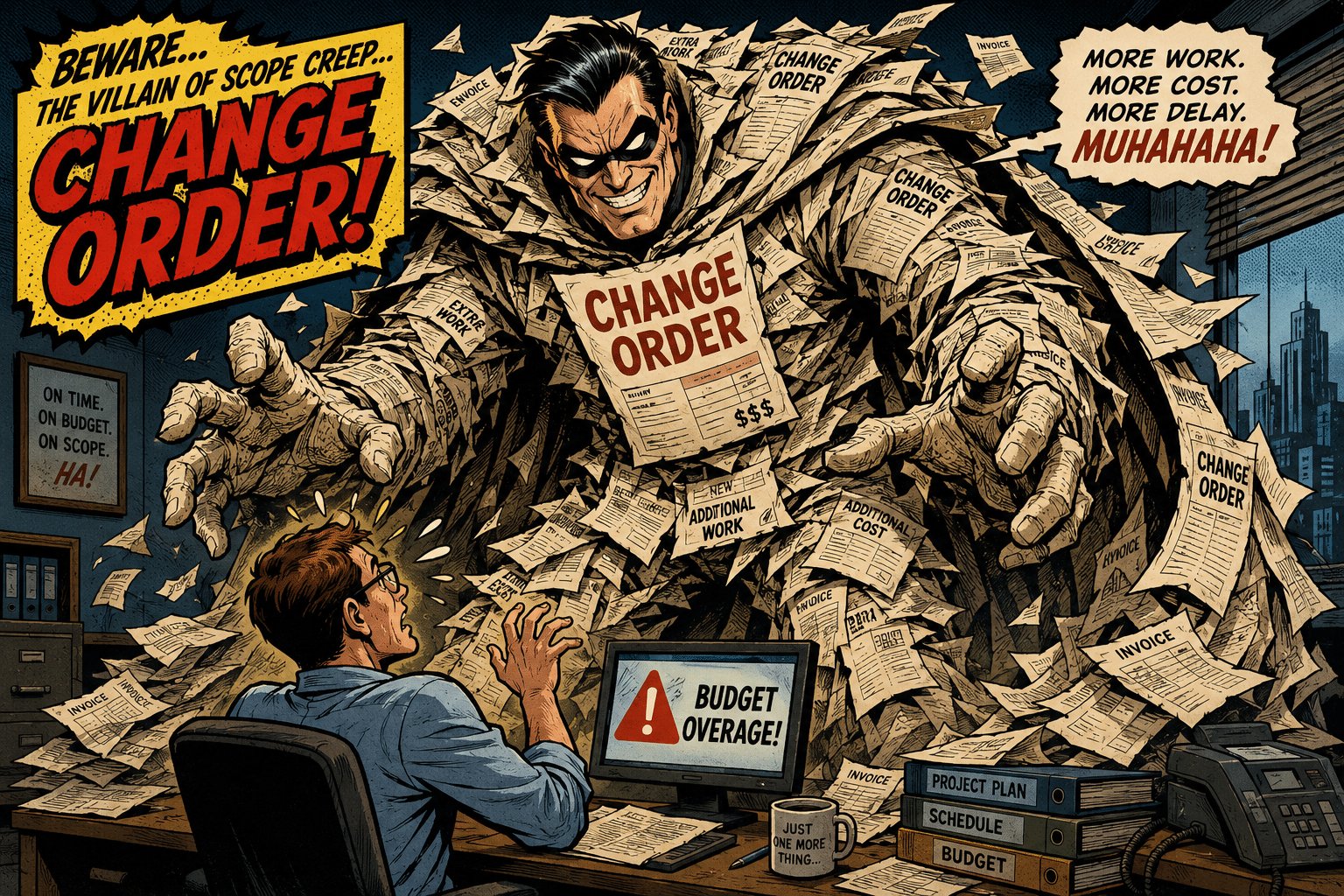
Nobody has ever been excited to sign a change order. Sometimes they’re necessary, but they’re typically the result of something happening that wasn’t expected or anticipated when the project began.
A digitization project lives or dies on the scope you set before a single page gets scanned, and most surprise invoices trace back to something that could’ve been caught in week one. Here’s how scoping actually goes awry, what to do about it, and what a well-handled project looks like from the first phone call to the final invoice.
The Three Ways a Scope Goes Sideways
After decades of scanning projects, we’ve found that almost every change order comes from one of three places:
(1) First is quantities. Clients tell us they have 30,000 microfiche and it turns out to be 18,000 … or 42,000. Too few and the pricing math breaks. Too many and someone’s chasing a new PO mid-project.
(2) Second is document condition, or material that was never mentioned at all. If a vendor hasn’t seen your collection in person, they’re pricing what you described, not what you have.
(3) Third is indexing assumptions. The client believes every file has a name and date in the same spot, then we open the boxes and half the index information isn’t where anyone said it would be.
Here’s a real one: a large court came to us with 100,000 rolls of microfilm. Buried in that collection were a couple hundred rolls with vinegar syndrome, film that’s chemically deteriorating and needs special handling before it can be scanned. Nobody knew until we found them. That became a change order, a new plan, and a conversation nobody had budgeted for. It ended up just fine, but it required a change order!
Do This Homework Before You Call Anyone
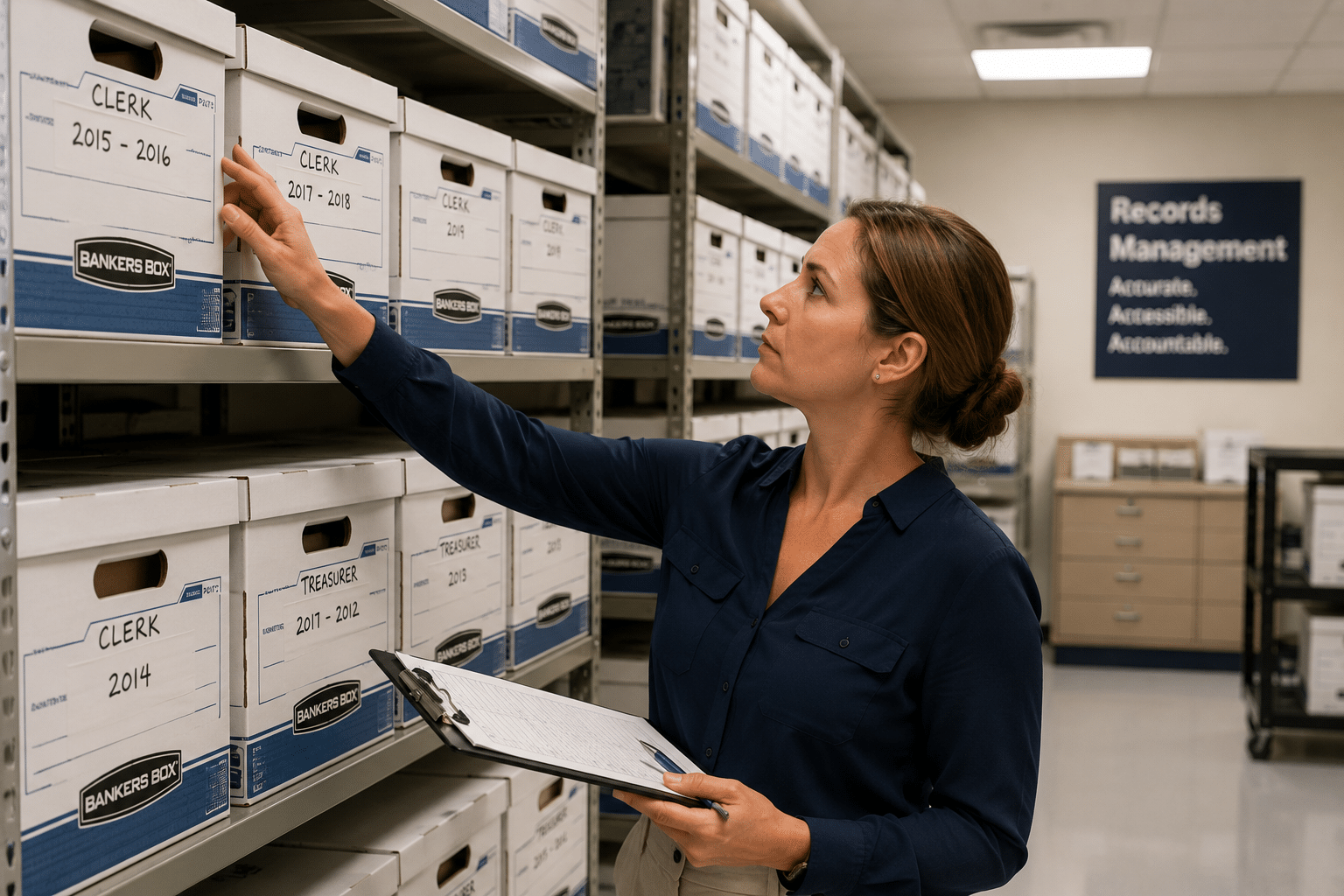
The first conversation with a vendor goes ten times better when you show up knowing what you have. For paper, it’s simple: count your boxes, or get a solid estimate of how many files you’re holding. You don’t need a page-perfect number — you need a defensible one. Think of it like a moving company quote. They don’t need to know how many forks you own, but they do need to know it’s a four-bedroom house and not a studio apartment.
For film-based material, the homework is knowing what type you have and roughly how much. Microfilm, microfiche, and aperture cards all come in different formats, and the format changes how the work gets scoped and priced. If you’re not sure what’s in your drawers, we’ve written guides on:
- estimating how much microfilm and microfiche you have
- microfilm types
- microfiche types
- types of aperture cards
Twenty minutes with those and a tape measure puts you ahead of most projects we see.
What a Good Vendor Asks Before Quoting Anything
If a vendor gives you a firm price without asking many questions, that price is a guess — and one of you is going to pay for the difference. A good scoping process feels almost nosy.
We ask what types of material are in the collection, what condition they’re in, and whether anything odd is mixed in. We ask for pictures. We ask for samples, because a handful of real documents in our hands tells us more than an hour of description over the phone.
When it makes sense, the best move is a site visit. Walking the collection together — opening drawers, pulling boxes, looking at the actual material — is the single most accurate way to scope a project. It also gives both sides a chance to confirm quantities and catch the surprises while they’re still cheap to deal with.
And if a site visit isn’t practical, a good vendor won’t just shrug and quote anyway. They’ll walk you through exactly how to count and estimate your own collection so the numbers you hand over are numbers everyone can stand behind.

Pricing That Plans for the Unknown
Even with good homework, some collections can’t be counted precisely until the work starts. The answer isn’t crossing your fingers, it’s structuring the price so the uncertainty is already handled.
One tool is a minimum billable threshold. You might believe you have 30,000 microfiche, and we’ll price the project with a 20,000-fiche minimum — so even if the count comes in lower, the pricing everyone agreed to still works and nobody’s renegotiating mid-project.
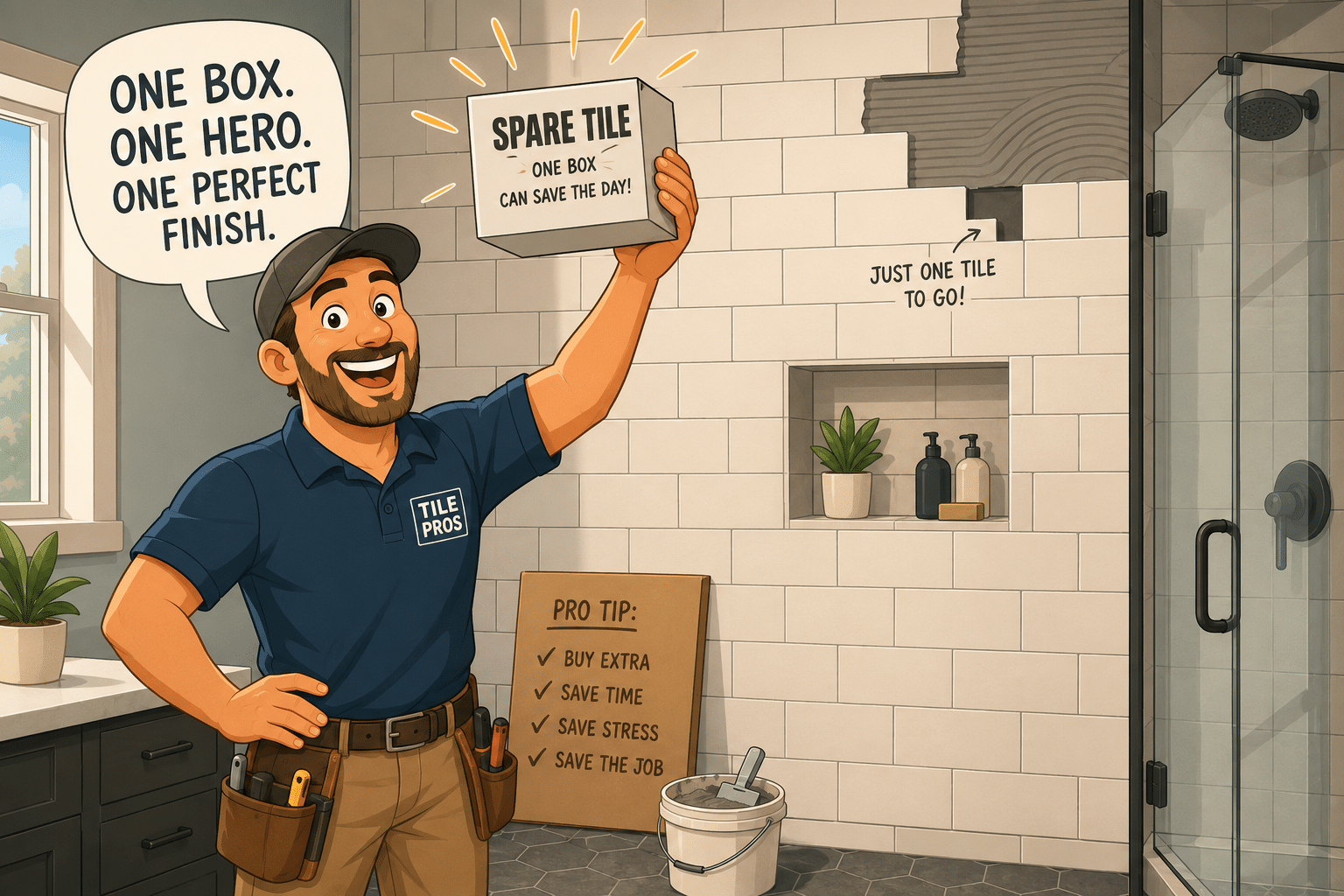
The other tool works in the opposite direction: a capped or flat price with a built-in buffer. Say you think you have 450 rolls of microfilm. We can set a flat price that covers you up to 500 rolls. It’s the same reason a contractor tells you to order 10% extra tile for a bathroom remodel — the little bit of headroom costs far less than stopping the job to reorder.
Ask any vendor you’re evaluating whether they offer structures like these. If every ounce of counting risk sits on your side of the table, that’s worth knowing before you sign.
When a Change Order Is Actually the Right Answer
Here’s the part most articles skip: sometimes a change order is the correct outcome, and how it’s handled tells you everything about your vendor.
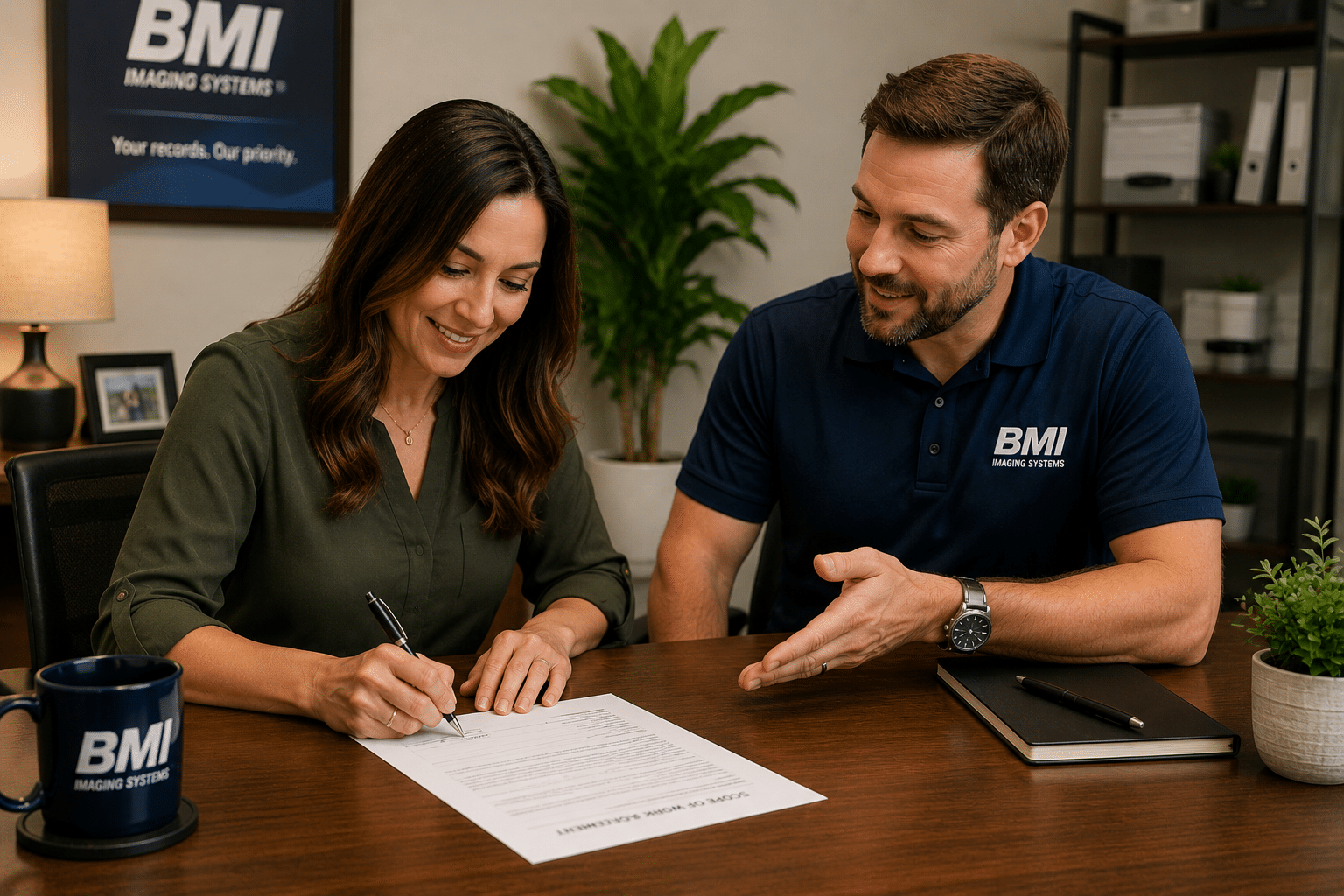
When something out of scope surfaces mid-project — a new material type, a procedural change, film that needs special treatment — the right move is to stop, tell you what we found, and put a change order document in front of you to review and sign before any out-of-scope work happens.
No work first, no invoice surprise later. You stay in control of the decision.
Quantity overruns get handled with the same mindset. Say you budgeted for 15,000 student records and the true count lands at 16,100 — something nobody knows until the material is actually scanned and processed, because that’s when the real count exists. Rather than dropping one big unexpected bill, we’ll flag it and can split the invoice so you pay what was already allotted now and work out the remainder in a way that fits your budget cycle.
A fair change order is a conversation with options. A bad one is a line item you find out about after the fact.
If you take one thing from this post, make it that distinction — and pick a partner who scopes carefully enough that you rarely need the conversation at all.
Next Steps
Reach out to us today! Click the “Get Your Quote” button below, fill out the form, and we’ll quickly reply to you to discuss your project.
Further Reading
What Happens to Your Records During a Scanning Project?
Scanning rarely fails on hardware—it fails on planning. Here are four common mistakes and a simple, low-risk way to avoid them.
Beyond Scanning: Why Accessible PDFs Are the Next Step in Digital Transformation
Scanning gets records online. Accessible PDFs make them usable by everyone. This article explains why true digital transformation doesn’t stop at digitization—and how accessible PDFs improve compliance, usability, and long-term value across your organization.
4 Mistakes That Cause A Scanning Project to Fail (And How to Avoid Them)
Scanning rarely fails on hardware—it fails on planning. Here are four common mistakes and a simple, low-risk way to avoid them.