

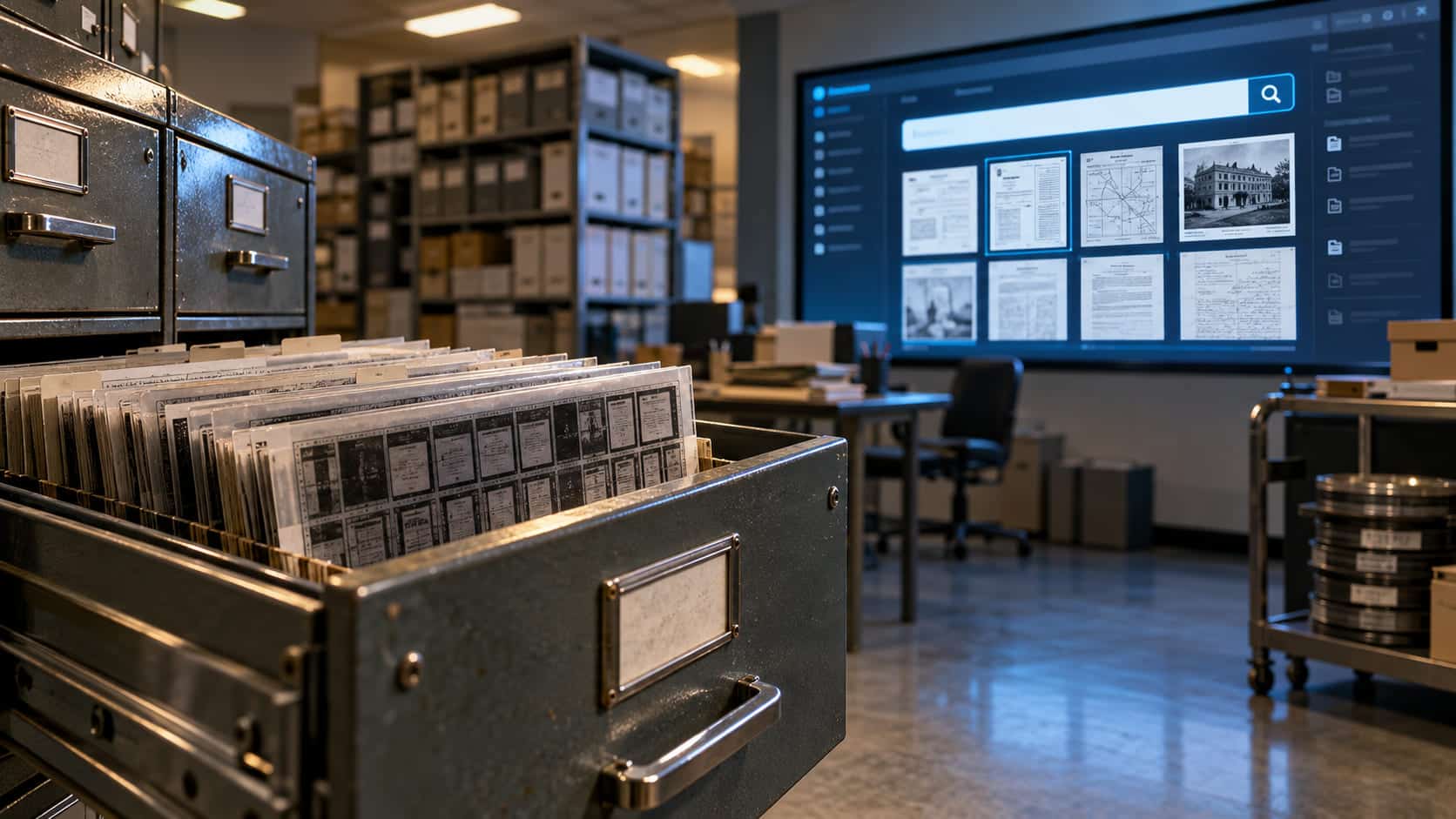
AI can’t open a fiche drawer. It can’t thread a roll of microfilm, and it can’t flip through 600 boxes of paper in the basement.
If a chunk of your records collection is still sitting in hard copy, your shiny new AI platform is working with half the story, and nobody’s telling you which half is missing. Here’s why digitization is step zero for any real AI strategy, not a side project you’ll get to someday.
Your AI Can Only Read What It Can Reach
Every agency and organization is getting the same question from leadership right now: “What’s our AI strategy?”
The platforms are impressive. They can summarize thousands of files, spot patterns across decades, and answer questions in plain English. But every one of them runs on the same fuel, and that fuel is digital data. Gartner reported this year that more than half of government AI projects never make it into production, and data readiness is a big reason why.
Think of it like a search engine for your own building. If a record isn’t digital, it isn’t in the index, and as far as the AI is concerned, it doesn’t exist. That’s the part that gets lost in the strategy meetings. Paper files, microfiche sheets, and microfilm rolls are invisible to every AI tool on the market, no matter how smart the tool is.
You can buy the best engine on the lot, but it won’t go anywhere with an empty tank.
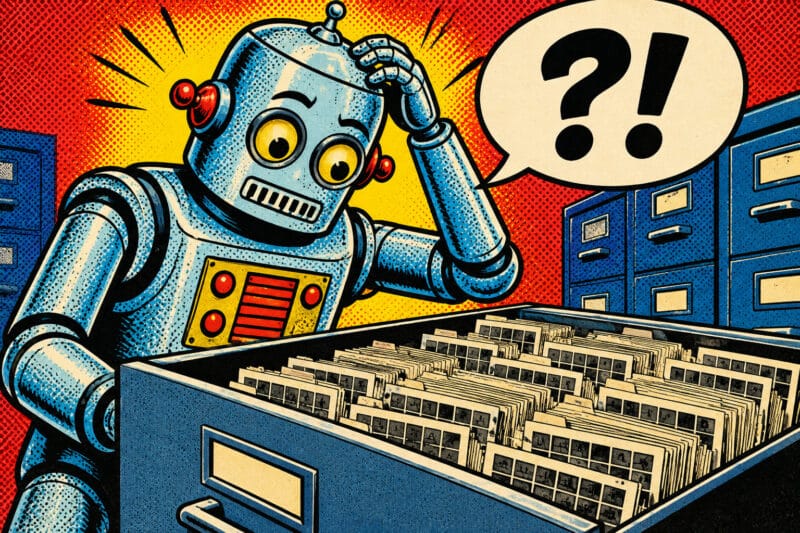
You’re Only Seeing Half the Picture
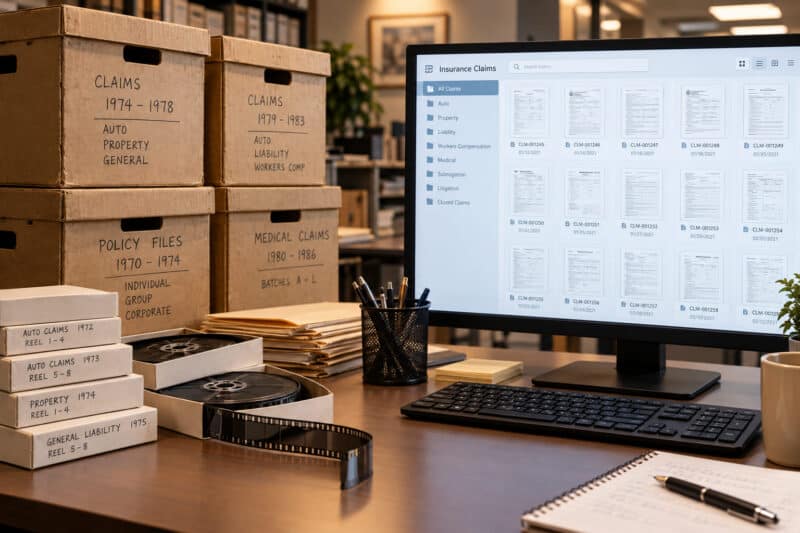
Here’s a fairly common situation: an organization’s current records are digital. They’ve been born digital for ten or fifteen years, they live in a document management system, and they’re ready for AI. But the backfile, the decades before that, is still on hard copy. Picture an insurance company with recent claims in its system and older claims sitting on 5,000 rolls of microfilm and in 600 boxes of paper.
Point an AI tool at that collection and it’ll happily give you answers. The problem is that those answers only cover the digital piece. It’s like putting together a 1,000-piece puzzle when half the pieces are still in a box in the attic. You’ll get part of the picture, and you might even think it looks finished, but you’re missing everything that would actually tell you what you’re looking at. Trends, history, and long-term patterns live in the backfile.
That’s why the backfile matters so much. Without it, you’re not getting the full use of your electronic systems, and you’re definitely not getting AI’s full potential. Whether the job is answering a records request, spotting fraud patterns, or understanding how a property changed hands over 50 years, the AI can’t aggregate what it can’t see.
Scope the Scan Before You Plan the AI
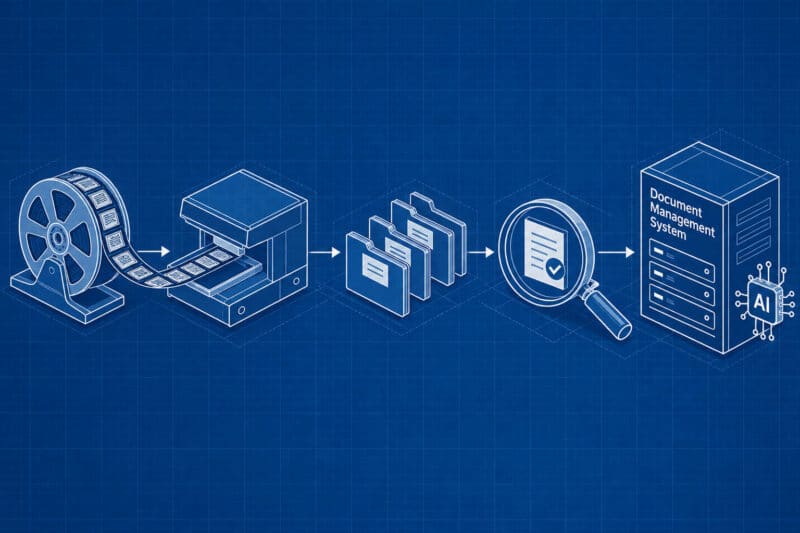
For the records manager, “we need to get this digitized” is just the first sentence. The specifics of the scanning project decide whether the data is actually usable once it gets to IT and the end users. Take those 5,000 rolls of microfilm – at a few thousand images per roll, you could be looking at 12.5 million images of insurance claims, student records, or police reports. That’s a lot of data to hand to a system without a plan.
Here are the decisions worth making before anyone touches a scanner:
- Indexing detail/depth. Do you need every file indexed at the file level by a company (like us), or will your application (maybe with AI built in) pull that data out on its own?
- File format. Your document management system or application needs images in a specific format. Know what it is up front so the delivery drops right in.
- Image quality. Do-it-yourself scans of old film can come out dark, skewed, or faded, and an AI tool could have trouble reading bad images.
Image quality is basically a photocopy of a photocopy problem. Every image “generation” you lose a little more, and eventually the text turns to mush. Getting the scanning done professionally means clean images and clean data from the start, so the AI has something worth working with.
Not Every Record Belongs in the AI Pile
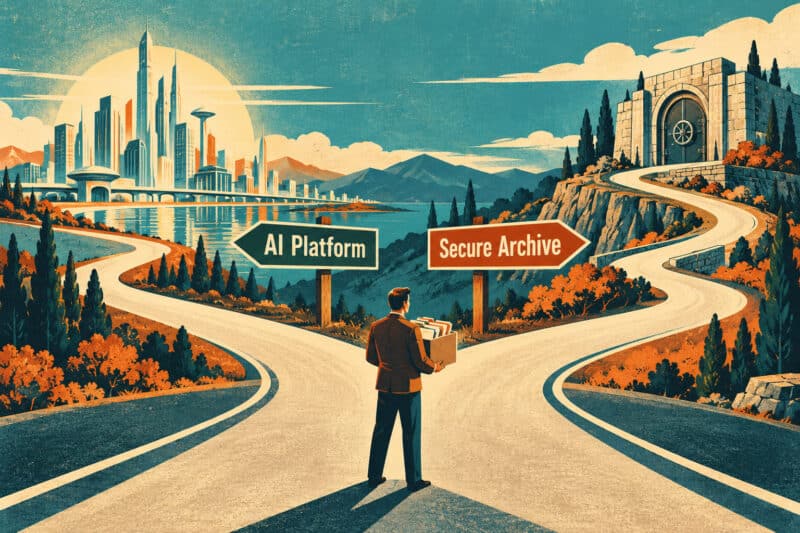
You don’t have to feed everything into the AI machine, and sometimes you shouldn’t. Criminal files, student records, and anything with personal information raise a real security question. Can you throw it all into one AI platform, or does it need to be parsed first? Often the smart move is to split the collection into confidential and non-confidential pieces before any of it gets near an AI tool.
That’s work a partner like BMI can do during the scanning project itself, so the data shows up already sorted. Then you decide what goes where. Some records go into your enterprise system with AI on top, others just need to be digitized, protected, and findable when someone asks for them.
For that second group, you don’t need a full-blown enterprise system. Our Digital ReeL secure hosted platform gives you secure, hosted access to digitized records without applying AI to sensitive images. It’s like keeping the important papers in a locked file cabinet instead of on the kitchen counter. Everything’s still there when you need it, just not out in the open.
Hard Copy Is a Liability Even If You Never Touch AI
Say you’re not planning to use AI at all. You’ve got 150,000 sheets of microfiche you barely touch, and you’re thinking, “Why bother?”
Because hard copy has one copy. A burst pipe, a fire, a flood, or a box that walks out the door, and those records are gone for good. There’s no undo button on a soaked filing cabinet.
Once records are digital, you can make backups and keep multiple copies in different places, which is how you keep data for the long haul. For records you don’t need to access often but can’t afford to lose, our Bytreon trusted system gives you an immutable, long-term digital copy. It can serve as your primary backup or as a second line of defense if the system those images live in goes down, gets breached, or gets hacked.
Whether the goal is AI, simpler access, or just peace of mind, it all starts in the same place. The records have to be digital first. Everything else, the platforms, the dashboards, the AI agents, is step two.

Next Steps
Reach out to us today! Click the “Get Your Quote” button below, fill out the form, and we’ll quickly reply to you to discuss your project.
Further Reading
What Happens to Your Records During a Scanning Project?
Scanning rarely fails on hardware—it fails on planning. Here are four common mistakes and a simple, low-risk way to avoid them.
Is Digitizing Your Records Actually Worth It?
Digitizing costs money up front, but hard copies cost you money every single day. Here are five real reasons converting your records pays off, and how to tell if it’s worth it for your organization.
New Fiscal Year, New Scanning Budget: Scope Your Digitization Project Now, Not in February
You got the money in July, and the fiscal year still feels wide open in August. It isn’t — here’s the real timeline behind a digitization project, and why scoping it now beats scrambling in June.