

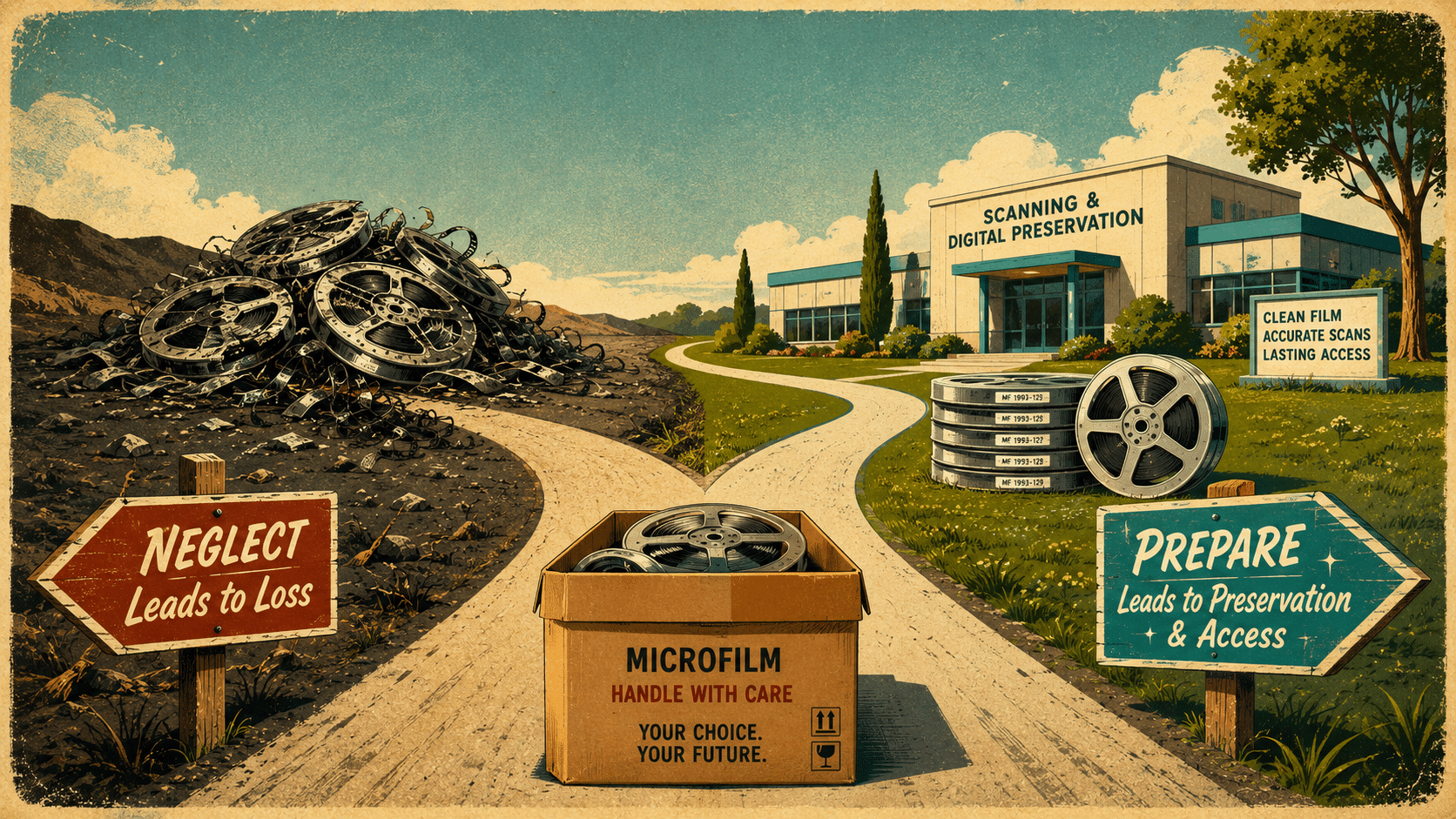
Your microfilm has survived decades in a filing cabinet, a basement, or the back of a storage closet. Ironically, the most dangerous trip it’ll ever take is the short one to the scanning vendor. A little care up front — how you handle the film, pack the boxes, and label what you’re sending — is the difference between reels that show up ready to scan and reels that show up crushed, scratched, or scrambled. Here’s how to get your film boxed and shipped the right way.
Handle It Like It’s the Only Copy … Because It Probably Is!
For most organizations, the microfilm is the only surviving record of whatever’s on it. There’s no backup in a drawer somewhere, so treat every reel like the one-of-a-kind it is.
The biggest temptation is to unspool a roll to “see what’s on it,” and that’s exactly where damage starts. Every time film gets pulled out and wound back by hand, you risk scratches, creases, and fingerprints that then show up on every single scanned frame. The image lives right on the surface of the film, and the oils from your fingers don’t wipe off cleanly.
Keep the reels in their boxes or on their cores and let the scanning equipment do the looking. If you absolutely have to peek, hold the film by the edges, just like you’d handle an old family photo.

Pack Boxes Full and Snug — Empty Space Is the Enemy
The most common way film gets damaged in transit isn’t somebody dropping the box. It’s the reels rattling around loose inside it.
Picture a half-empty box of dishes riding in the back of a moving truck: every bump sends them sliding and slamming into each other until something cracks. Microfilm reels do the exact same thing.
Pack your boxes full and stack the reels neatly so they hold each other in place. If a box isn’t completely full, fill the empty space with padding — packing paper, bubble wrap, even crumpled newsprint — so nothing can shift around.
The test is simple: if you can pick up the box, give it a gentle shake, and hear things moving, it’s not ready to ship yet.

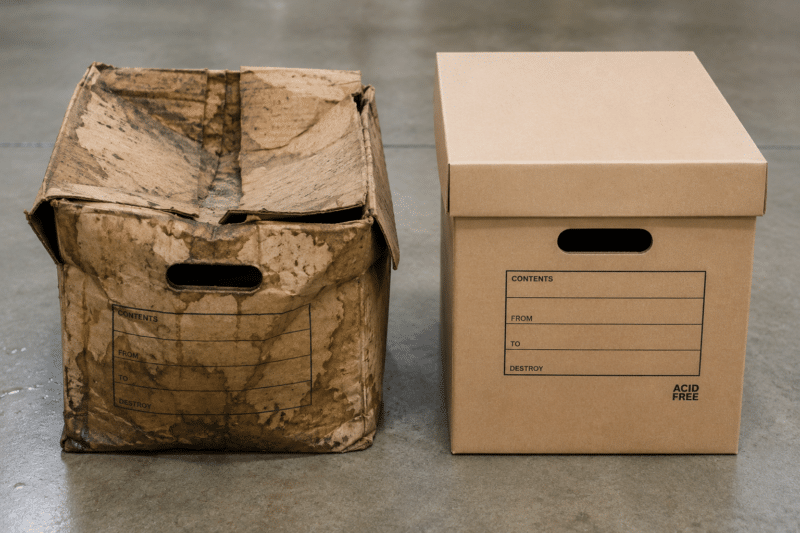
Use Fresh, Sturdy Boxes — Not the Ones Crumbling in the Closet
The box is the armor around your film, and if the armor’s already dented, it’s not doing its job.
We regularly see film show up in the same boxes it’s been sitting in for twenty years — edges crushed, tops caved in, the cardboard gone soft and powdery from a damp storage room. A box in that shape isn’t going to survive a shipping pallet and a few handoffs between trucks.
Before you pack anything, take an honest look at what you’re packing it into. If your boxes are ripped, smashed, water-stained, or just plain tired, move the film into new, sturdy boxes that can actually take a hit. A few dollars in fresh boxes is cheap insurance for records you can’t replace.
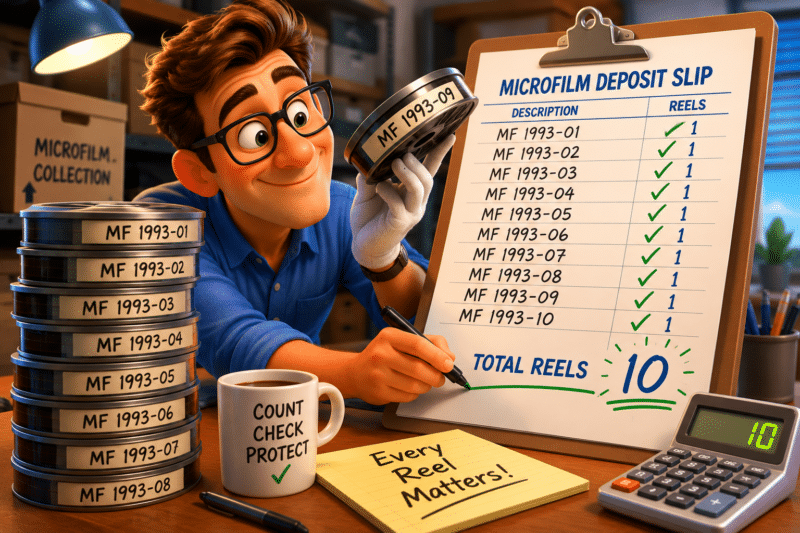
Get a “Reel” Count Before Anything Ships
Don’t just dump reels into random boxes and hope it all sorts itself out on the other end. A little organization now saves you a real headache after the project’s done.
Keep your reels grouped in a way that makes sense: by date, by department, by record type, whatever matches how you’ll want to find things later.
While you’re at it, get a solid count of what you’re sending. As a rough rule of thumb, a standard box holds somewhere around 90 to 100 rolls of 16mm film, or 50 to 60 rolls of 35mm, but that swings depending on the box and how tightly things are packed, so treat those as ballparks, not gospel.
Use those numbers to sanity-check your own inventory before the film leaves the building. An accurate count is like reconciling a deposit against your receipt: it lets your vendor confirm everything arrived and nothing slipped out along the way.
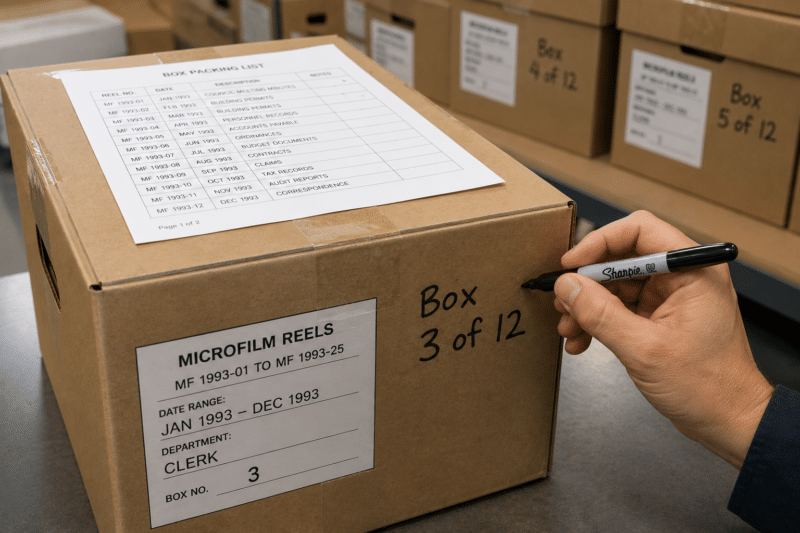
Label the Boxes and Send a Packing List
Once your film is organized, make it easy for the next set of hands to understand. Label each box clearly and number them — “Box 3 of 12” tells everyone instantly if something’s missing before a single reel gets scanned. Tuck a simple packing list into the shipment that spells out what’s in each box, the roll counts, and any special instructions, like the order you’d like things processed or which records are confidential.
This is the same logic behind organizing a junk drawer instead of throwing everything in a pile: when there’s a system, nothing gets lost and nobody has to guess. Clear labels and a packing list also dramatically cut down the chance of a mis-index later, because the people scanning your film know exactly what they’re holding.
It’s five minutes of work that protects the whole project.
Watch for Film That’s Already Turning
While you’ve got your hands on everything, keep your eyes and nose open for film that’s started to break down. The classic warning sign is smell — acetate film that’s deteriorating gives off a sharp vinegar odor, which is exactly why it’s nicknamed “vinegar syndrome.”
You might also spot reels that have gone brittle, warped, buckled, or shrunken, or film with an oily residue or little crystals forming on the surface. If you find any of that, don’t bury those reels in the middle of a packed box and forget about them. Set them aside, make a note of which ones they are, and tell your vendor before you ship.
A good scanning partner will quarantine that film, pack it separately, and take a closer look once it arrives to figure out the safest way to scan it. Catching it while you’re packing gives that film its best shot at being recovered before the damage goes any further.

Next Steps
Reach out to us today! Click the “Get Your Quote” button below, fill out the form, and we’ll quickly reply to you to discuss your project.
Further Reading
4 Mistakes That Cause A Scanning Project to Fail (And How to Avoid Them)
Scanning rarely fails on hardware—it fails on planning. Here are four common mistakes and a simple, low-risk way to avoid them.
The Myth of Microfilm Longevity: Is 500 Years Just a Marketing Number?
We’ve all heard it: “Microfilm lasts 500 years.” But has anyone actually proven it—and will your collection make it that far in the real world? This blog separates lab promise from day-to-day reality and lays out a practical path to protect access to your records now.
Found a Box of Microfilm? Here’s Your Beginner’s Guide to Digitization
Opened a box and found microfilm? This beginner’s guide explains what it is, how to estimate your volume and costs, the scanning steps, and the best ways to access your files—so you can turn those reels into secure, searchable digital records.